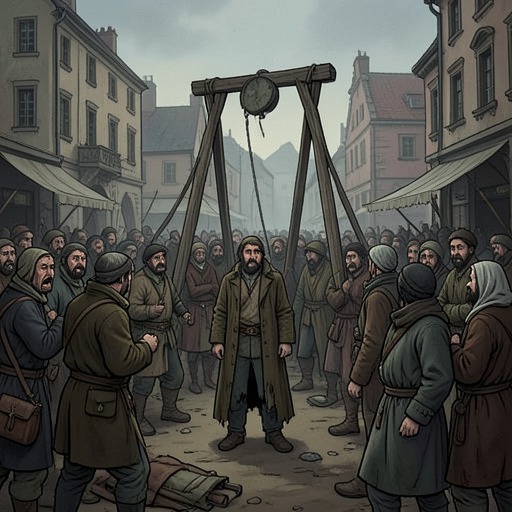
The Tribe’s Killing of Charlie
Earth AbidesThe Tribe’s Killing of Charlie casts a long shadow over the community when a fever outbreak brings sickness and death. The event’s significance in this account lies less in the circumstances of the killing, which are not retold here, than in the question its aftermath raises: whether the community’s suffering is connected to the act it took against Charlie.
The killing and the fear of retribution
George, Maurine, Molly, and some younger members turn to prayer during the outbreak. They fear that God is exacting retribution for Charlie’s death. Their response gives the killing a new meaning within the community: what had been a decision against Charlie is now feared as a possible cause of collective punishment.
The fear has practical consequences as well as religious ones. Ralph considers taking his family, none of whom has yet been stricken, away from the community. Ish urges him to stay, arguing that they may already be infected and that a small, isolated group would be in greater danger than the community together. The outbreak thus makes the question of Charlie’s killing part of a larger crisis of shared safety and communal resolve.
Ish’s doubt during the epidemic
After falling ill himself, Ish tells Em that he fears others may see the epidemic as punishment. He wonders whether God struck back because the community killed Charlie, and whether the disease Charlie carried was used to make that judgment unmistakable. His questions connect the killing to the subsequent deaths, but they remain fears and doubts, not an established explanation of the outbreak.
Em’s rejection of punitive certainty
Em answers that the community acted according to what it believed best. She resists the idea of an angry God who withholds the rules and then punishes people for breaking them, and asks Ish not to bring that conception of God back into their world. Her response does not erase the grief or settle the outbreak’s cause; it refuses to turn suffering into proof of divine retribution.
Ish is reassured by Em’s answer and takes her hand. The exchange shifts the killing’s aftermath from communal suspicion toward renewed trust between them. Charlie’s death remains morally present, but the epidemic does not establish that the community has been divinely punished for it.